Decision guide
Repair or replace your furnace?
Neither answer is always right. This guide shows how to weigh age, repair size, safety, comfort, and your plans so you can make the call with confidence instead of pressure.
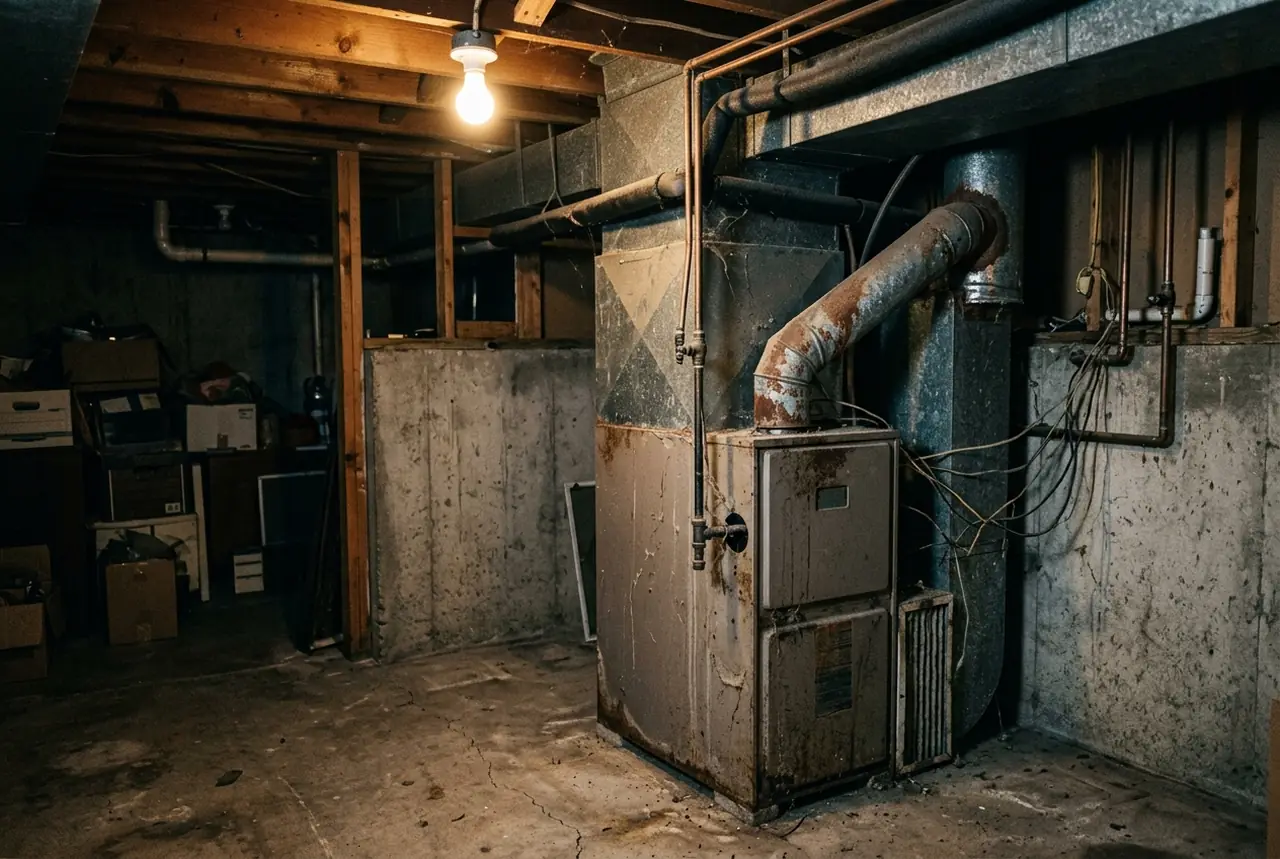
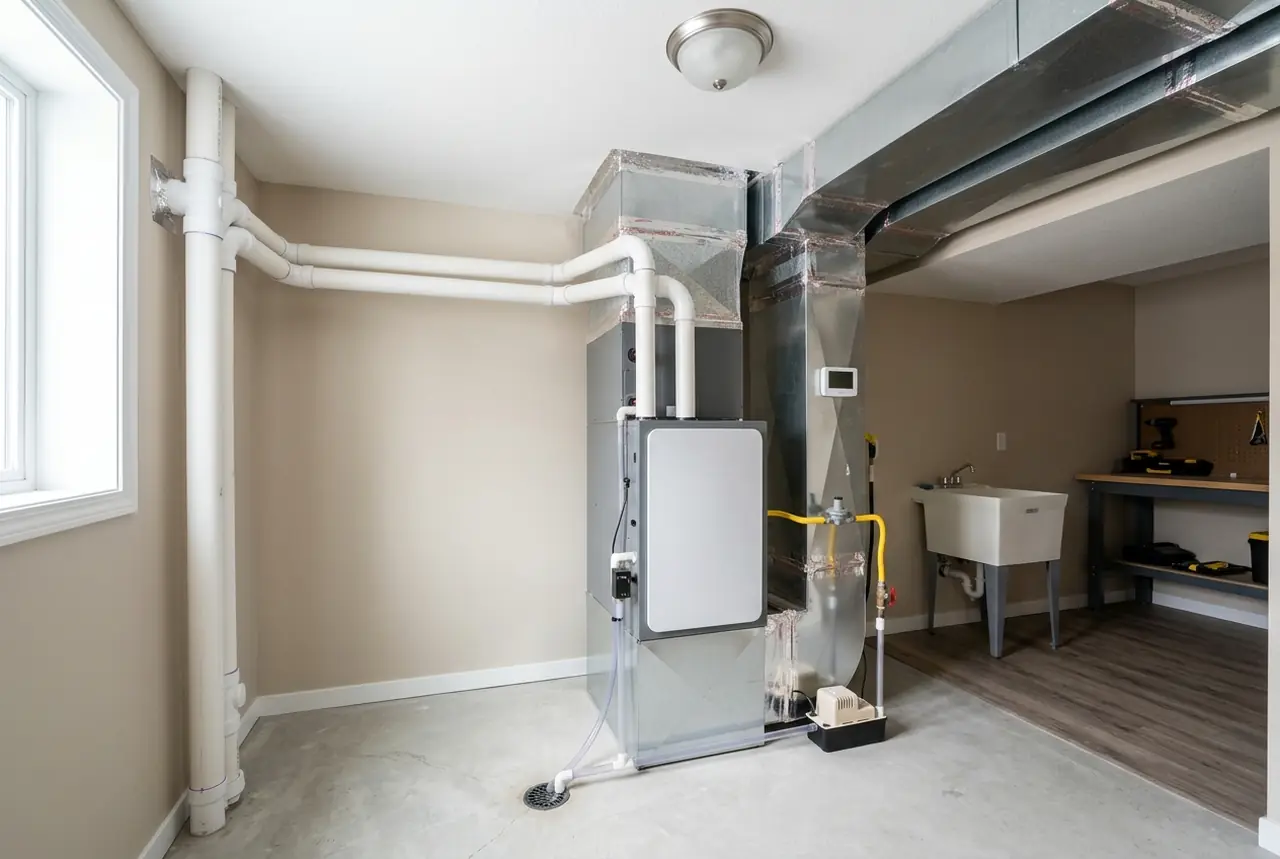
Side-by-side
How the factors usually point
| Factor | Leans repair | Weigh carefully | Leans replace |
|---|---|---|---|
| Furnace age | Under about 12 years | 12 to 18 years: weigh carefully | Over about 18 to 20 years |
| Repair size | Minor or moderate part | Major part (inducer, board, blower motor) | Heat exchanger or multiple major parts |
| Safety findings | None | Minor venting or wear issues | Cracked heat exchanger, CO concern |
| Repair history | First issue in years | Repairs most winters | Repeated failures, same symptom |
| Comfort | Even and adequate | Some rooms lag | Persistent cold rooms, short cycling |
| Home plans | Staying, no changes | Remodel or AC replacement soon | Adding cooling, heat pump, or addition |
Run your own numbers
The "age times repair cost" rule says that when the product passes roughly 5,000, replacement deserves a look. It is a starting point. Safety findings override it, and comfort problems or plans to add cooling can tip a close call.
Repair usually makes sense when
- The furnace is under about 12 to 15 years old
- One part failed and the rest tests healthy
- You may move within a few years
Replacement usually makes sense when
- A cracked heat exchanger or venting failure is confirmed
- Repairs have become yearly and comfort has declined
- You're adding AC or a heat pump and the furnace is near end of life
Decision helper
An educational starting point based on a common rule of thumb (age × repair cost) plus safety and history. It is not a diagnosis.
Age × cost = 5,600
Replacement deserves a serious look
Age and repair size together suggest the money may be better spent on a properly sized new system. Compare a full replacement quote against the repair before deciding.
Decision risks to watch for
- Replacing on fear. A heat exchanger claim should come with photos, camera footage, or a clear explanation. A second opinion is reasonable.
- Repairing past the point of value. A third major repair on a 20-year-old furnace often costs more over two winters than a new system's first decade of maintenance.
- Sizing to the old unit. If you replace, insist on a load calculation. Many older furnaces are oversized.
- Ignoring ductwork. If rooms were cold before, a new furnace alone may not fix them.
Next: how diagnosis-first repair works, what a proper replacement includes, or what drives furnace costs.
For established contractors
Decision tools like this build trust before the first call.
Denver Furnace Repair is a VisibilityReady™ demonstration. See how the same architecture, buyer guidance, and machine-readable structure can represent an established contractor.