No heat · short cycling · strange noises
Furnace repair in Denver, diagnosed before anything is replaced
When a furnace stops heating, the useful first step is a measured diagnosis: confirm what failed, why it failed, and whether the rest of the system is healthy enough to justify the repair.
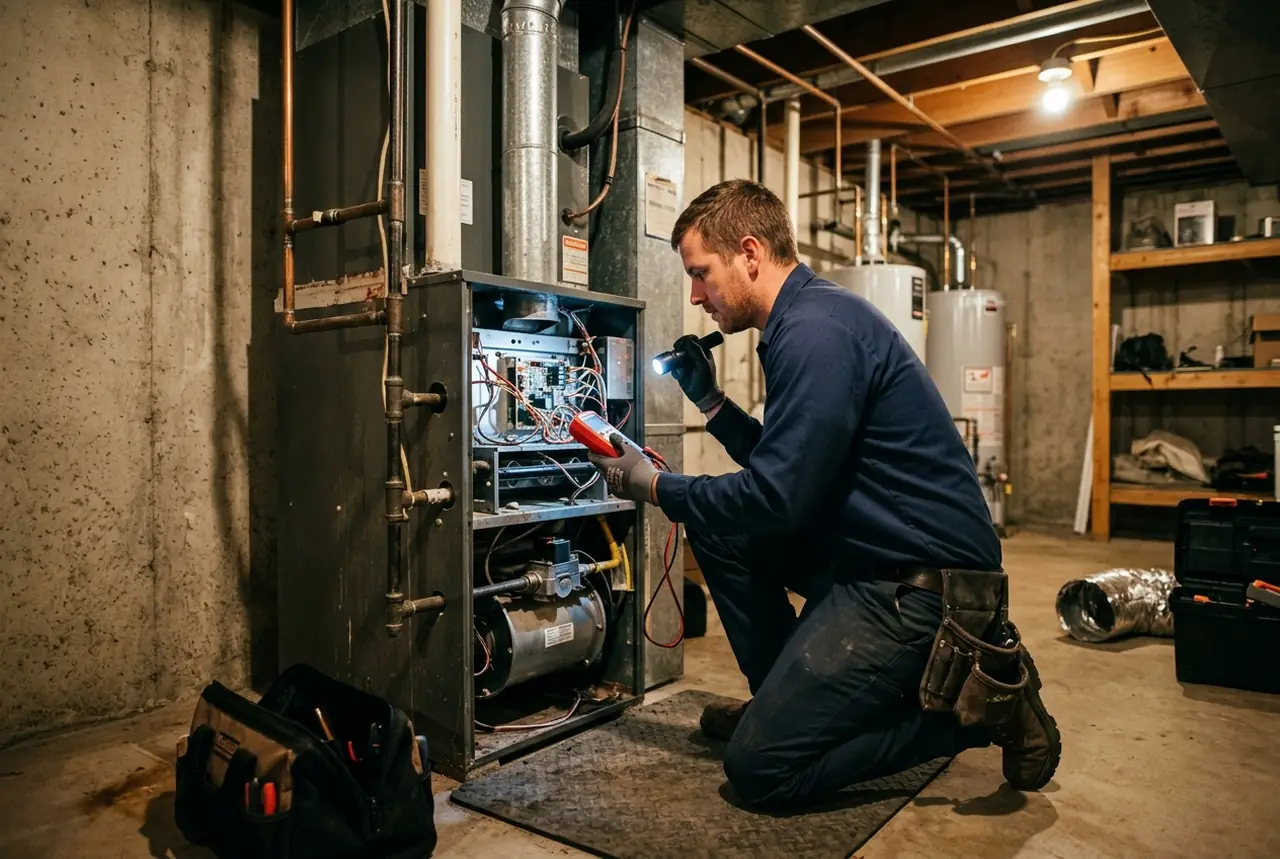
What this service is, and who it's for
Most no-heat calls in the Denver metro trace back to a short list of components: ignition, flame sensing, pressure switches and venting, the blower and its capacitor, the control board, or the thermostat and its wiring. Many of these are moderate repairs. A few are signs of a system that is wearing out.
A good repair visit separates the symptom from the cause. A furnace that keeps tripping a limit switch may need a new switch, but the reason it overheated may be a clogged filter, closed registers, or undersized return air. Replacing the part without fixing the cause brings the same call back next month.
A strong fit when
- The furnace is under roughly 15 years old and has a reasonable service history.
- One component has clearly failed and the heat exchanger, venting, and blower check out.
- You need heat restored now and want options explained before any larger decision.
- The same symptom has not been repaired repeatedly in the last few seasons.
Another option may fit better when
- The furnace is near or past 18 to 20 years and needs a major part. Read the repair-or-replace guide first. Go to the related page
- You smell gas or a CO alarm is sounding. That is a safety event, not a repair appointment. Go to the related page
- Heat works but some rooms never get comfortable. That is often a duct or airflow problem. Go to the related page
What the work involves
The process, step by step
- 01
Listen first
What happened, when it started, what changed, and any error-code blinks you noticed on the control board.
- 02
Safe start-up observation
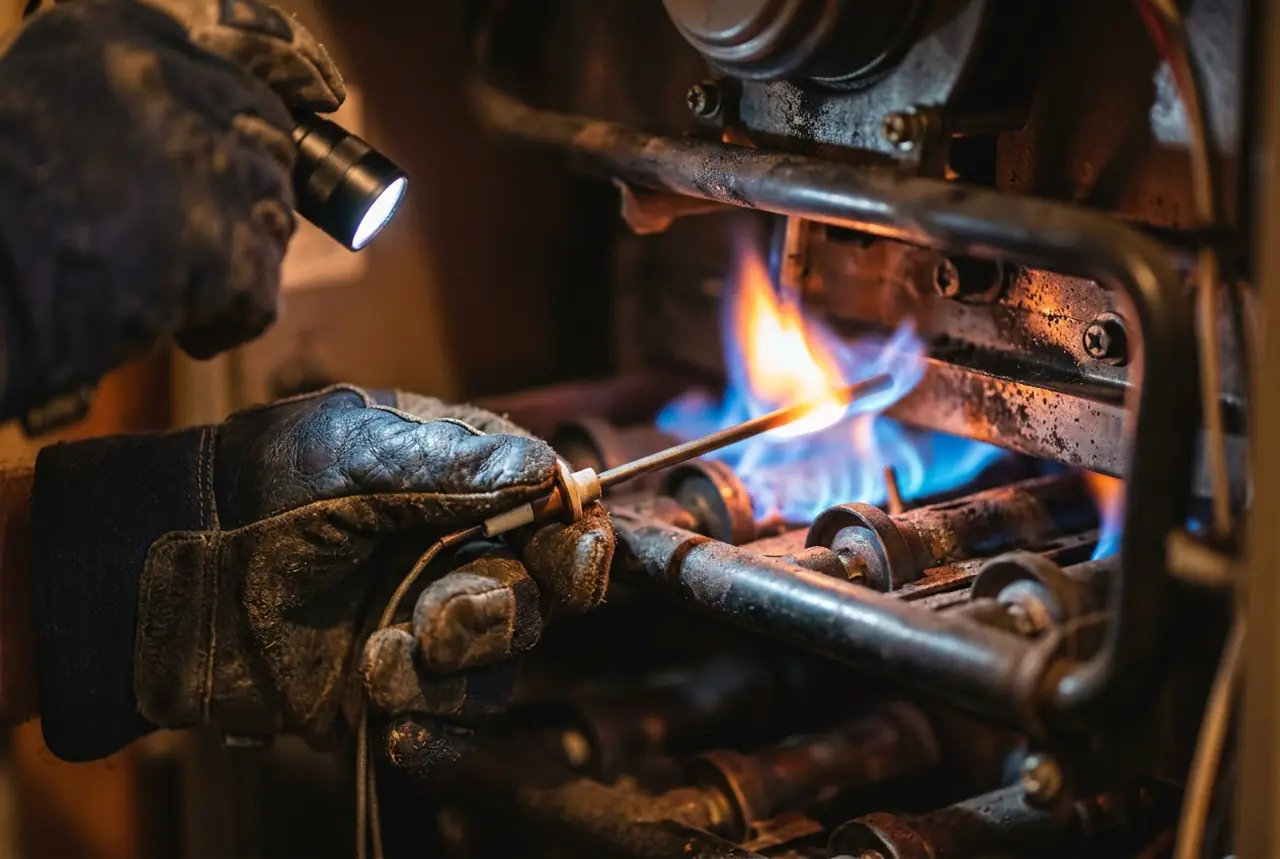
Watch a full ignition sequence to see exactly where it fails: inducer, pressure switch, igniter, flame proving, or blower.
- 03
Measure, do not guess
Test voltages, temperatures, gas pressure, and venting draft. Inspect the heat exchanger area for visible cracks or rust.
- 04
Explain the finding
Show the failed part or reading, explain cause versus symptom, and give repair options with clear scope before work starts.
- 05
Repair and verify
Complete the approved repair, then run the system through multiple heating cycles and confirm temperature rise and safety controls.
Price and scope
What affects cost and scope
Responsible pricing depends on what is found. These are the factors that move it.
- Which part failed
- A flame sensor cleaning and a control board replacement are very different scopes of work.
- Part availability
- Common universal parts are often on hand. Brand-specific boards or inducer motors may need to be ordered.
- Access
- Tight crawlspace or attic installations take longer to service safely than an open basement.
- Underlying cause
- If airflow or venting caused the failure, correcting it may add scope but prevents repeat failures.
- Timing
- After-hours and holiday service typically costs more than scheduled daytime work.
Realistic expectations
- Many repairs are completed in a single visit when the part is commonly stocked.
- Some findings, such as a suspected cracked heat exchanger, require the unit to stay off until resolved.
- A repair restores function; it does not reset the age or efficiency of an older system.
Mistakes to avoid and local considerations
Common mistakes
- Replacing parts in sequence until something works instead of testing first.
- Resetting a furnace repeatedly when it locks out. Lockouts usually protect you from a real fault.
- Ignoring a filter that is weeks overdue; restricted airflow causes many overheating shutdowns.
Denver considerations
Denver cold snaps often drop overnight temperatures sharply, and furnaces that limped through autumn tend to fail on the first long, cold run. Thin air at about 5,280 feet also means gas appliances should be set up for altitude; a furnace not adjusted for elevation can run hotter or cycle on safety limits.
Common questions
- Is it safe to keep resetting my furnace?
- One reset after a power interruption is reasonable. If it locks out again, stop. Repeated lockouts usually mean a safety control is detecting a real problem such as poor venting, overheating, or failed flame proving.
- What should I check before calling?
- Confirm the thermostat is set to heat and above room temperature, check that the furnace switch and breaker are on, make sure the filter is not clogged, and confirm the front panel is fully closed. Do not open gas valves or bypass switches.
Related guidance
For established contractors
Want your services explained this clearly?
Denver Furnace Repair is a VisibilityReady™ demonstration. See how the same architecture, buyer guidance, and machine-readable structure can represent an established contractor.